Saint Vincent and the Grenadines is an island nation comprising numerous islands in the eastern Caribbean Sea. Many of these locations rely on largely self-contained infrastructure, including independent power and water supplies as well as decentralised wastewater treatment systems.
On one of the islands, a local management company is responsible for operating the municipal infrastructure. Its remit includes utility services, technical facilities and properties used for tourism. Ensuring the reliable operation of the island’s wastewater treatment plant is also one of its key responsibilities.
The plant primarily treats domestic wastewater generated by residential buildings, accommodation facilities, hotels and other local establishments. Sanitary facilities, kitchens, laundries and cleaning activities all influence the composition of the wastewater. At the same time, both the hydraulic load and the level of organic pollution vary throughout the year. During peak travel periods, the number of guests and employees increases, resulting in higher wastewater volumes and organic loads. During quieter periods, the influent flow decreases again.
Until recently, biological treatment was provided by an ageing rotating biological contactor. However, the system was no longer capable of meeting the operator’s long-term technical and operational requirements. A modern replacement solution was therefore required.
The new treatment plant needed to process 30 m³ of domestic wastewater per day while being integrated into the existing wastewater treatment infrastructure. Constructing an entirely new plant with large tanks and extensive civil works was not considered a viable option.
The site conditions also played an important role in the design process. Space for technical infrastructure is extremely limited on small islands. At the same time, long transport routes make it more difficult to procure construction materials, spare parts and specialist tools.
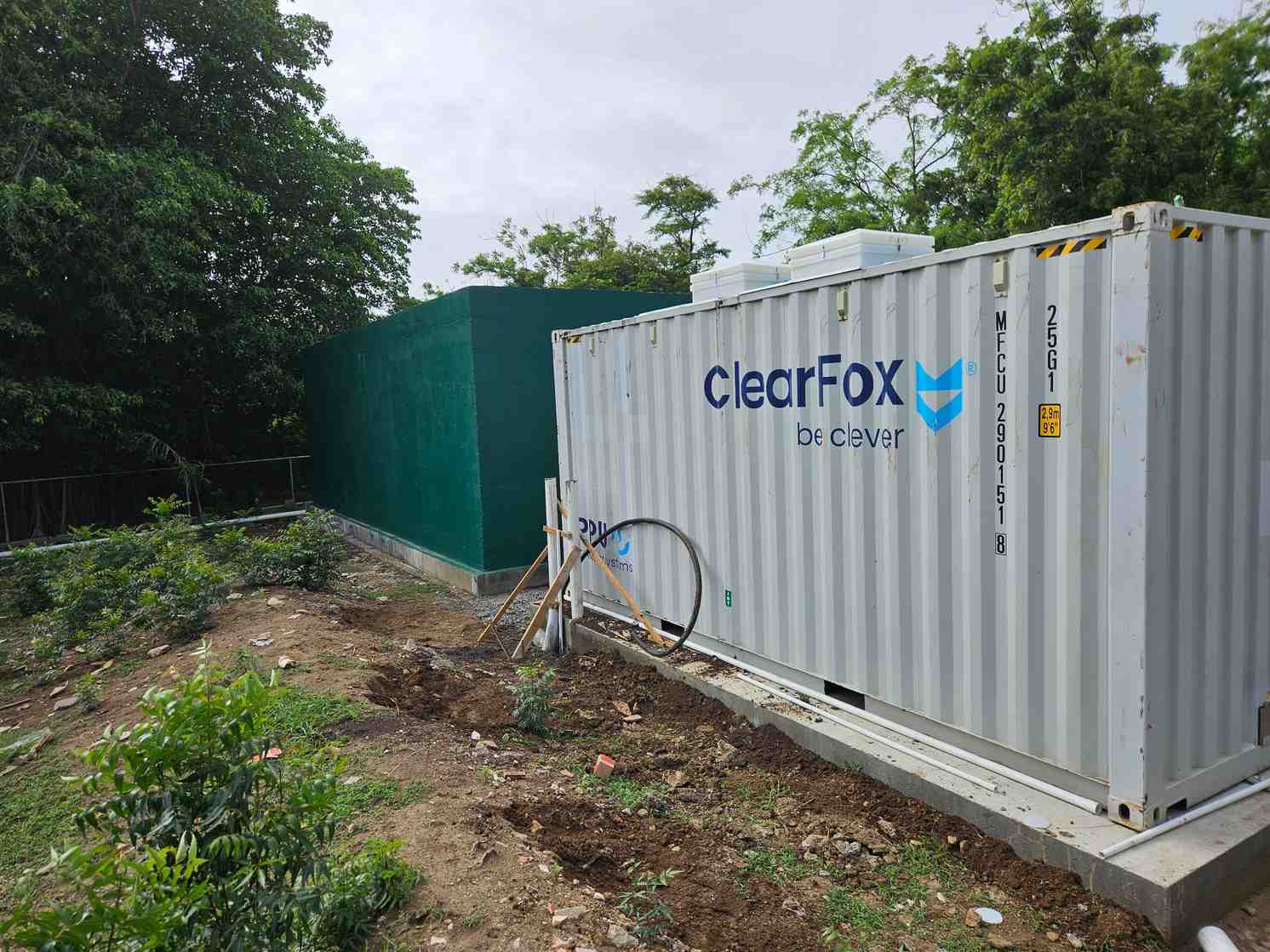
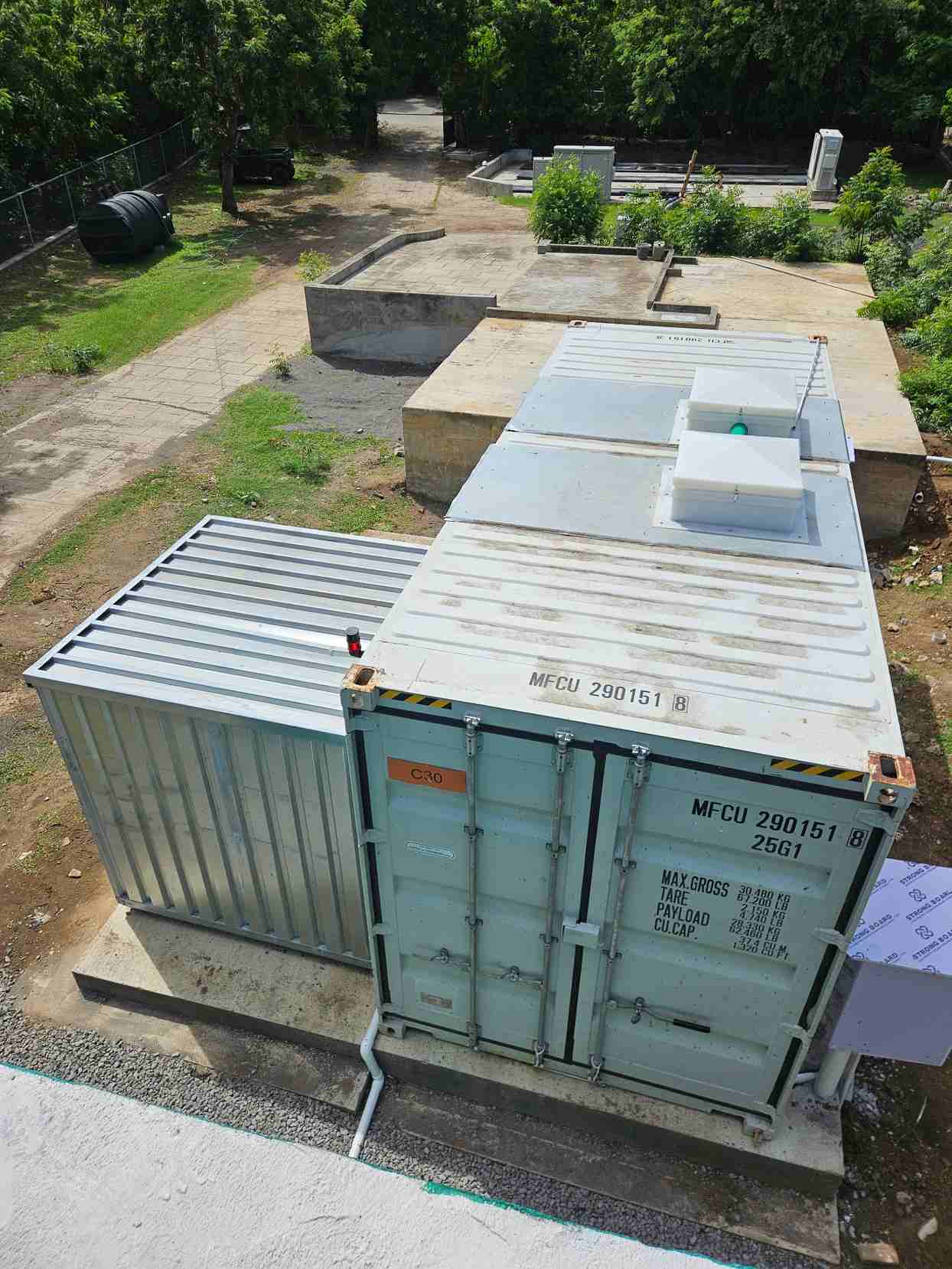
The project therefore required a compact, robust and largely prefabricated solution. PPU Umwelttechnik supplied a ClearFox® C-30 containerised treatment plant. The compact system replaces the outdated rotating biological contactor and treats up to 30 m³ of wastewater per day.
The existing rotating biological contactor was becoming an increasing operational risk. The process relies on rotating media that are alternately submerged in the wastewater and exposed to the surrounding air. This requires several mechanically driven components. Motors, shafts, bearings and discs are subject to continuous stress, and as the system ages, wear, maintenance requirements and the risk of failure all increase.
Technical failures are particularly critical at a remote island location. Spare parts cannot usually be sourced at short notice, while arranging for specialist service technicians to attend the site requires considerable planning. Prolonged downtime could jeopardise the island’s entire wastewater management system. The biological treatment stage therefore has to operate reliably every day.
The loading conditions of the treatment plant also change regularly. Seasonal variations result in fluctuating wastewater volumes and pollutant loads, while short-term hydraulic peaks can also occur during normal daily operation.
The new biological treatment stage had to accommodate these fluctuations without compromising treatment performance. At the same time, it needed to operate without constant readjustment or complex measurement and control systems. The operator required a solution that could be managed independently by local personnel following targeted training. Available space was another major constraint. Conventional activated sludge tanks and large secondary clarification basins would have required additional land and extensive construction work. However, the existing infrastructure was to be retained wherever possible.
The transition from the old system to the new technology also had to be carefully managed. Installation activities were only permitted to interrupt ongoing wastewater treatment operations for the shortest possible period. PPU therefore had to prepare each stage of the installation process in detail. In addition to the process technology itself, knowledge transfer was a central element of the project. Reliable long-term operation depends on appropriately trained personnel. The local operations team therefore needed to be fully familiar with plant operation, routine maintenance and the most important process control procedures.
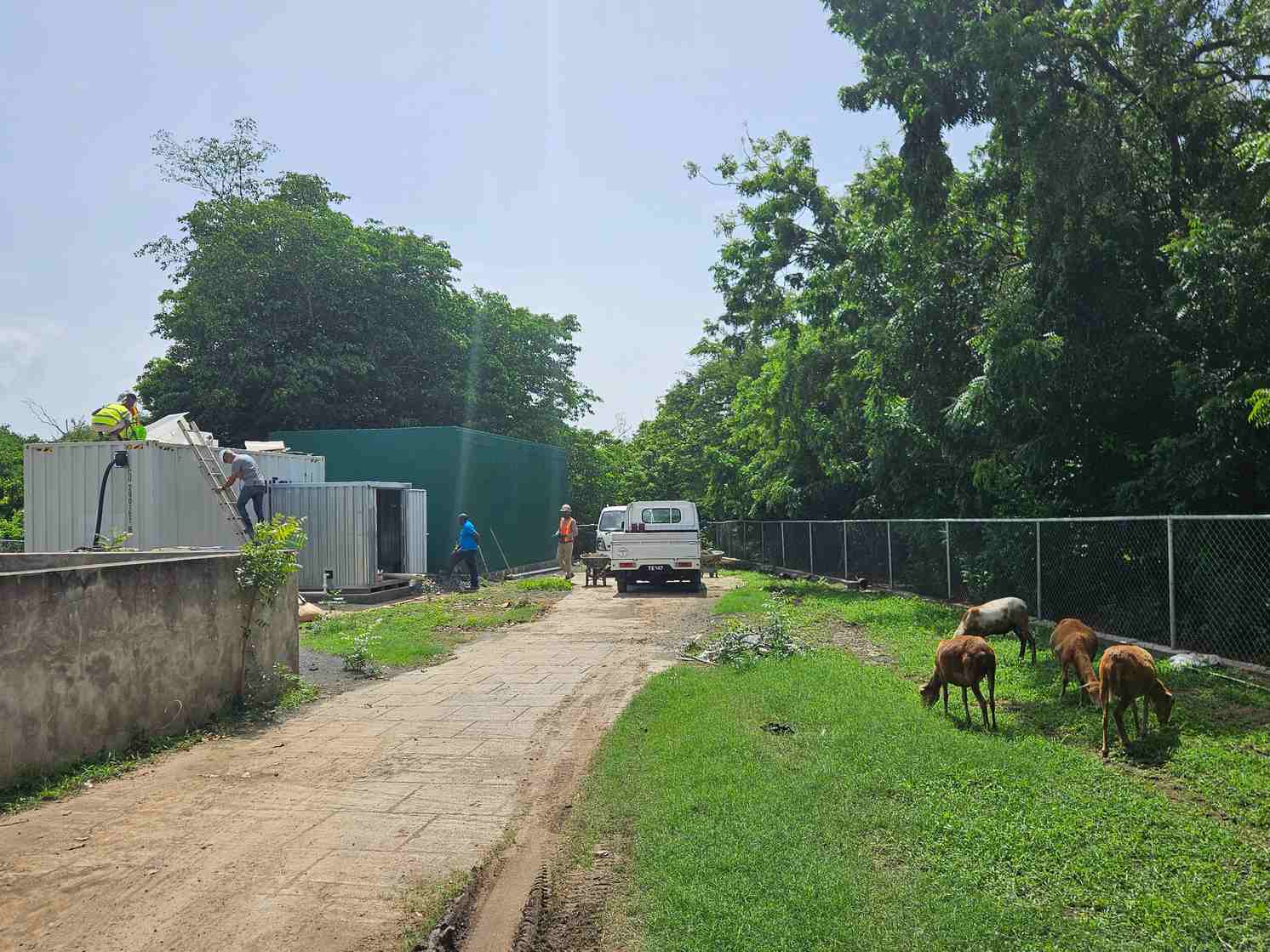
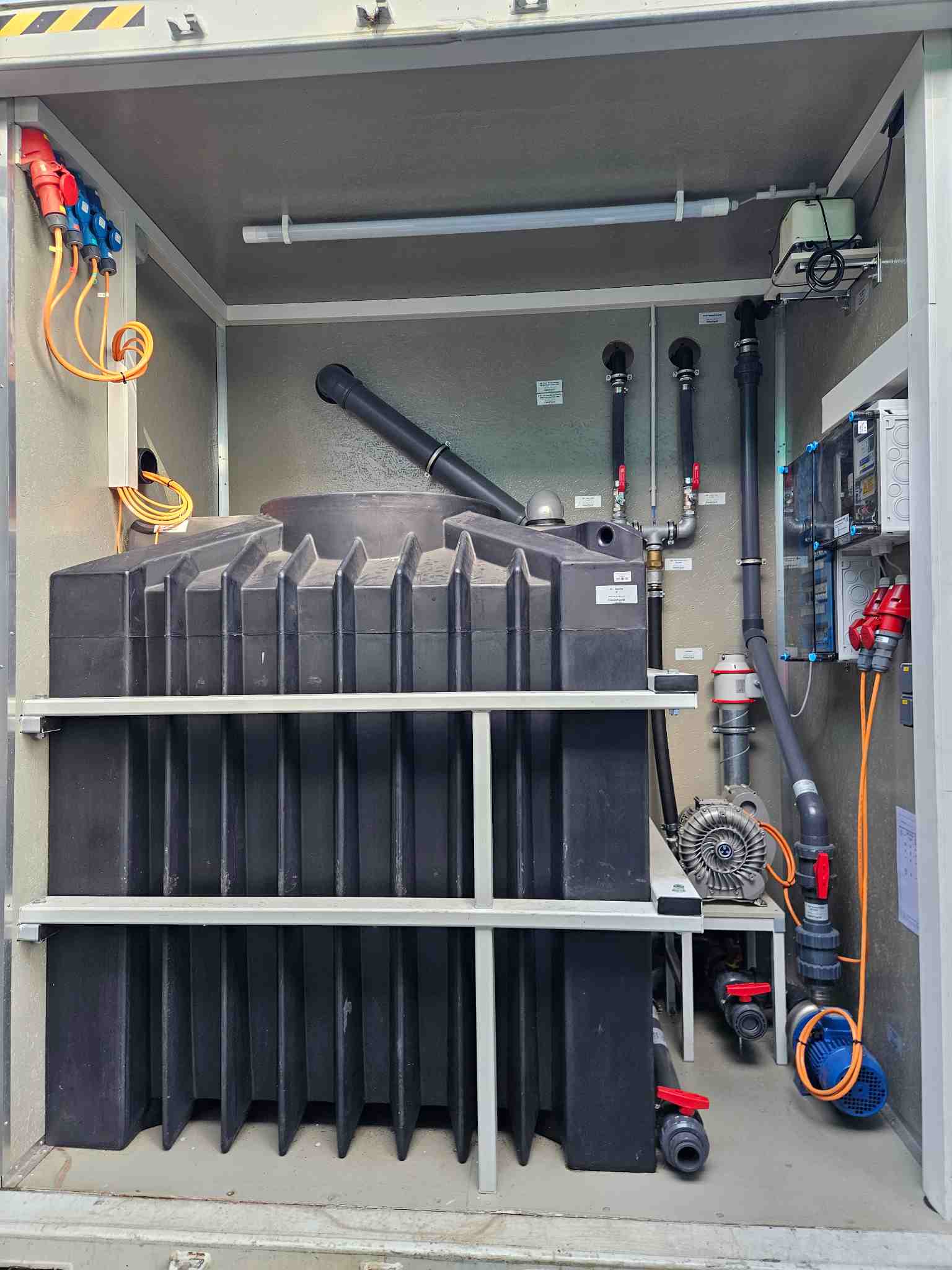
The ClearFox® C-30 replaces the old biological treatment stage with a modern containerised system. PPU manufactured the plant at its production facility in Germany according to the plug-and-play principle. Pipework, connections and technical components were installed before delivery, allowing the on-site work to focus primarily on positioning the system and connecting it to the existing infrastructure.
The C-30 consists primarily of a ClearFox® fixed-bed reactor and a lamella clarifier. Together, these compact treatment stages provide reliable biological treatment and effective solids separation within a very small footprint.
The pre-treated wastewater first enters the fixed-bed reactor, where it flows through several reactor chambers arranged in series. Each chamber contains permanently installed carrier media with a large biologically active surface area. Microorganisms colonise these media and form a stable biofilm that breaks down organic compounds and nitrogen-containing substances. Fine-bubble diffusers installed beneath the fixed bed provide the biofilm with an even and continuous supply of oxygen.
Different microbial communities develop within the individual reactor chambers and adapt to the pollutant concentrations present at each stage of the process. This ensures stable biological degradation performance throughout the entire treatment sequence. Because the biomass is firmly attached to the carrier media, the process is highly resilient to changing operating conditions. It reliably accommodates seasonal variations, hydraulic peaks and periods of reduced influent loading. There is no need to continuously adjust the biomass concentration.
Unlike the previous rotating biological contactor, the fixed-bed reactor does not require rotating biological media. This significantly reduces the number of mechanically stressed and wear-prone components, lowering maintenance requirements and improving overall operational reliability.
Following biological treatment, the wastewater enters the lamella clarifier. Here, excess biomass and other settleable solids are separated from the clarified water. The water flows evenly upwards through lamella plates installed at an angle of 60 degrees. Solids settle on the inclined surfaces and slide downwards into a sludge hopper. A pump removes the collected sludge at predefined intervals.
The treated water collects above the lamella plates before leaving the system via an overflow weir. The inclined plates significantly increase the effective settling area while requiring very little space. Compared with conventional sedimentation tanks, this technology can reduce the required footprint by up to 90 per cent. The lamella clarifier also contains no moving parts and requires almost no additional energy.
Following installation, PPU commissioned the ClearFox® C-30 on site. The technical team tested all system functions, configured the operating parameters and supervised the transition to the new fixed-bed treatment process. At the same time, PPU provided comprehensive training for the local operating personnel. The training covered plant operation, routine inspections, maintenance activities, sludge removal and the appropriate response to changing influent conditions.
The new ClearFox® C-30 treats 30 m³ of domestic wastewater per day. It modernises the municipal wastewater treatment plant, reduces mechanical maintenance requirements and improves long-term operational reliability. The project demonstrates how containerised wastewater treatment technology can be used to upgrade existing plants quickly and efficiently. The combination of German manufacturing, compact process technology, professional commissioning and operator training provides a reliable long-term solution for remote locations.
Yes. The ClearFox® C-Series is suitable for municipal, decentralised and commercial wastewater projects involving predominantly domestic wastewater. PPU designs each system based on the wastewater flow, pollutant load, required discharge limits and local site conditions. Its modular design covers treatment capacities ranging from small sites to larger municipal applications. Existing wastewater treatment plants can also be selectively expanded or modernised.
The C-30 can replace outdated or unreliable biological treatment stages, such as rotating biological contactors, disc-based biological systems or older activated sludge plants. PPU integrates the compact module into the existing infrastructure and continues to use existing structures wherever their condition and functionality permit. This reduces the amount of civil engineering work required, shortens installation times and lowers overall project costs.
The ClearFox® fixed-bed reactor remains stable even when wastewater flows and pollutant loads fluctuate. The microorganisms grow as a biofilm on permanently installed carrier media. This biofilm remains inside the reactor and adapts naturally to changing loads. The technology is therefore particularly suitable for islands, hotels, holiday resorts, smaller communities and sites with seasonal variations in occupancy or demand.
The achievable effluent quality depends on the wastewater composition, applicable discharge limits and selected plant configuration. Depending on the design, ClearFox® C-Series systems can treat wastewater to a standard suitable for direct discharge, reuse or irrigation. Where more stringent requirements apply, the biological treatment process can be supplemented with additional modules for filtration, disinfection, and nitrogen and phosphorus removal.
PPU manufactures the system according to the plug-and-play principle. Pipework, connections, aeration equipment and other components are pre-installed at the factory. On-site work is therefore largely limited to positioning the unit, completing the hydraulic and electrical connections, and carrying out the final commissioning. This approach shortens the construction period and reduces the need for specialist personnel and tools at the project site.
Yes. The containerised design makes the system both modular and mobile. If the volume of wastewater increases, additional treatment modules can be added to expand the available capacity. The containers can be operated in series or in parallel. If the use of the site changes, the system can also be relocated, transported or reinstalled at another location with comparatively little effort.